
 Kia Optima: Rear Glass Defogger Printed Heater. Repair procedures
Inspection
|

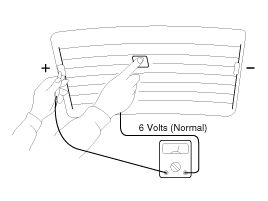
| 1. | Turn on the defogger switch and
use a voltmeter to measure the voltage of each heater line at the glass
center point. If a voltage of approximately 6V is indicated by the voltmeter,
the heater line of the rear window is considered satisfactory.
|
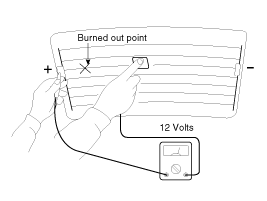
| 2. | If a heater line is burned out
between the center point and (+) terminal, the voltmeter will indicate 12V.
|
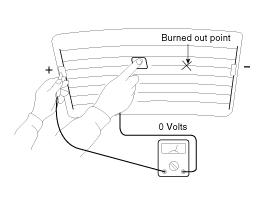
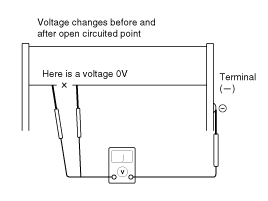
| 3. | If a heater line is burned out
between the center point and (-) terminal, the voltmeter will indicate 0V.
|
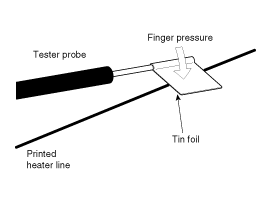
| 4. | To check for open circuits, slowly
move the test lead in the direction that the open circuit seems to exist.
Try to find a point where a voltage is generated or changes to 0V. The point
where the voltage has changed is the open-circuit point.
|
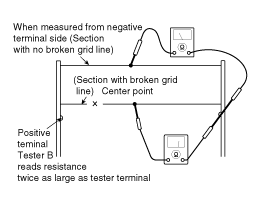
| 5. | Use an ohmmeter to measure the
resistance of each heater line between a terminal and the center of a grid
line, and between the same terminal and the center of one adjacent heater
line. The section with a broken heater line will have a resistance twice
as that in other sections. In the affected section, move the test lead to
a position where the resistance sharply changes.
|
Prepare the following items:
| 1. | Conductive paint. |
| 2. | Paint thinner. |
| 3. | Masking tape. |
| 4. | Silicone remover. |
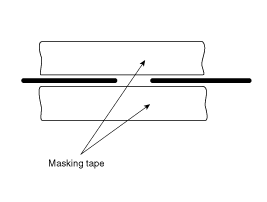
| 5. | Using a thin brush: Wipe the glass adjacent to the broken heater line, clean with silicone remover and attach the masking tape as shown. Shake the conductive paint container well, and apply three coats with a brush at intervals of about 15 minutes apart. Remove the tape and allow sufficient time for drying before applying power. For a better finish, scrape away excess deposits with a knife after the paint has completely dried. (Allow 24 hours).
|
 Components and Components Location
Component Location
1. Rear glass defogger relay (Engine room relay box)
2. Rear glass defogger switch (A/C controller)
3. Rear glass defogger
...

See also:
Glove box
To open the glove box, pull the handle and the glove box will automatically open.
Close the glove box after use.
WARNING
To reduce the risk of injury in an accident or sudden stop, always keep ...
Manifold Absolute Pressure Sensor (MAPS). Description and Operation
Description
Manifold Absolute Pressure Sensor (MAPS) is a speed-density
type sensor and is installed on the surge tank. It senses absolute pressure
of the surge tank and transfers the analog si ...
Troubleshooting
Trouble Symptom Charts
Trouble Symptom 1
Trouble Symptom 2
Trouble symptom
Probable cause
Remedy
The set vehicle speed varies greatly ...
Categories
Kia Optima Manuals
- Kia Optima DL3 2019-2026 Owners Manual
- Kia Optima DL3 2019-2026 Service and Repair Manual
- Kia Optima TF 2011-{2019} Owners Manual
- Kia Optima TF 2011-2026 Service Manual
- Kia Optima MS/Magentis 2000-2005 Owners Manual
